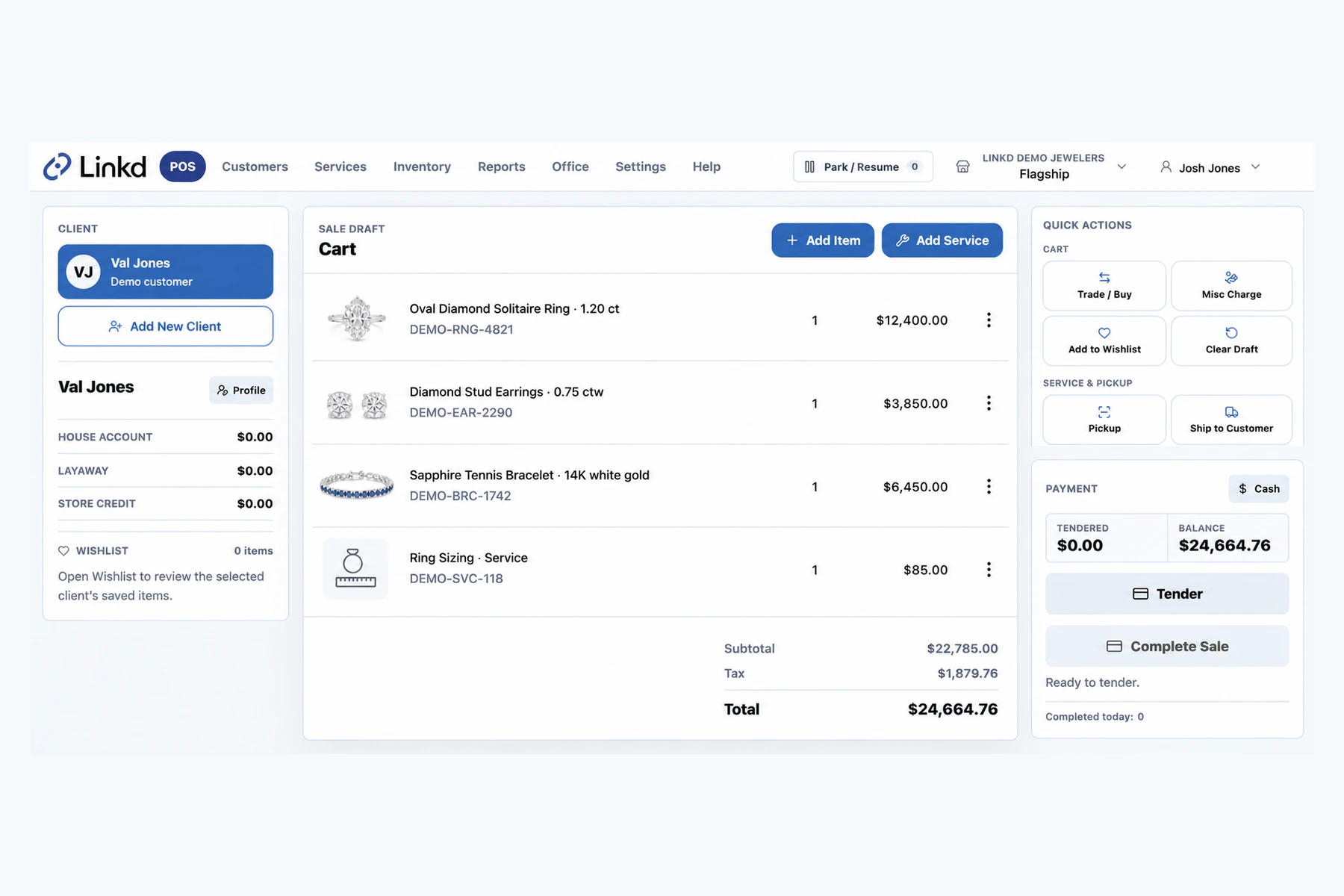
01 / Register
Record the sale and selected tender
The register keeps the customer, items, services, amount due, and payment choice together.

Jewelry store finance
Review customer balances and tender activity in Linkd before preparing the records your accounting process needs.
From sale to books
The register keeps the customer, items, services, amount due, and payment choice together.
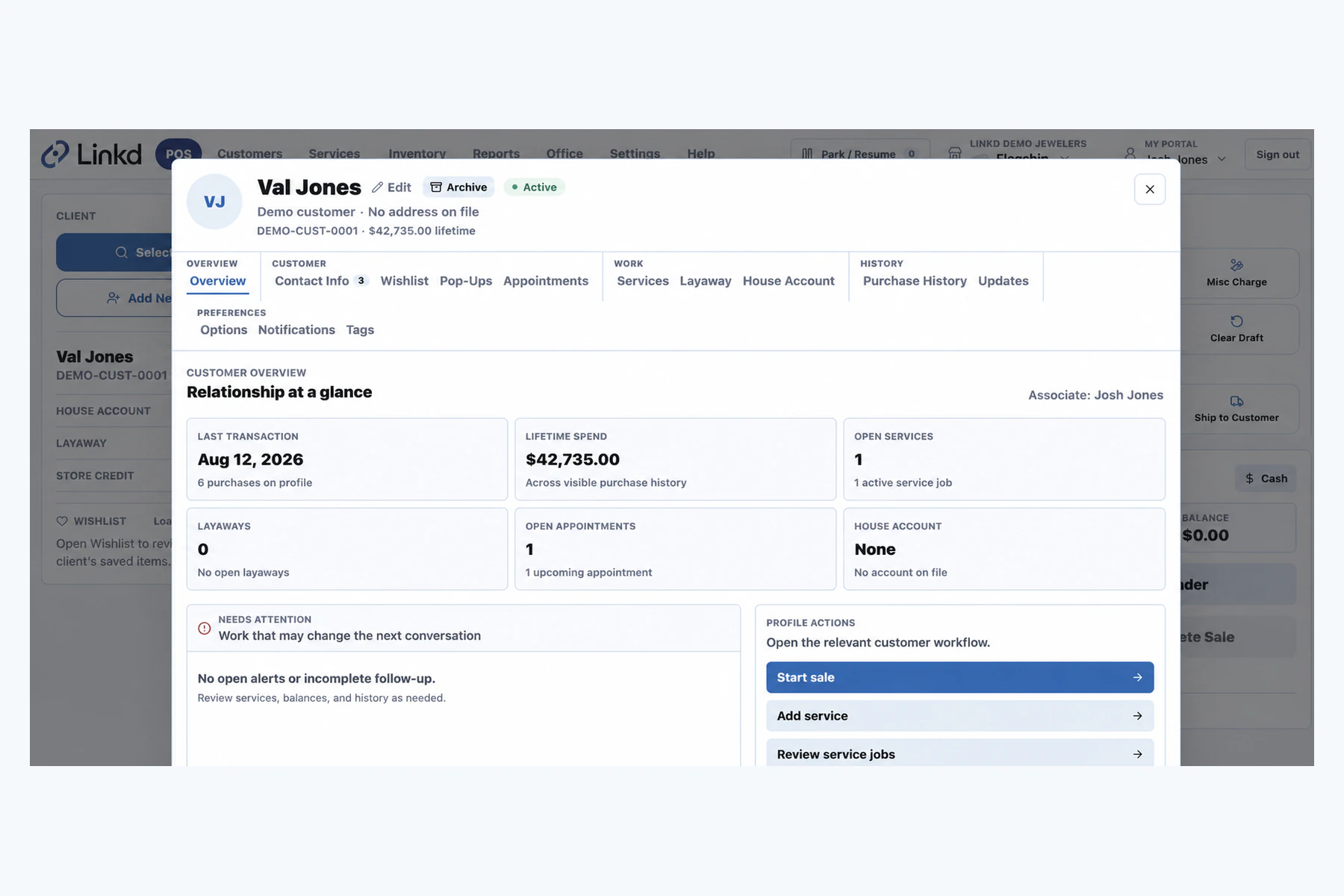
Return to the customer workspace when you need account or transaction details.
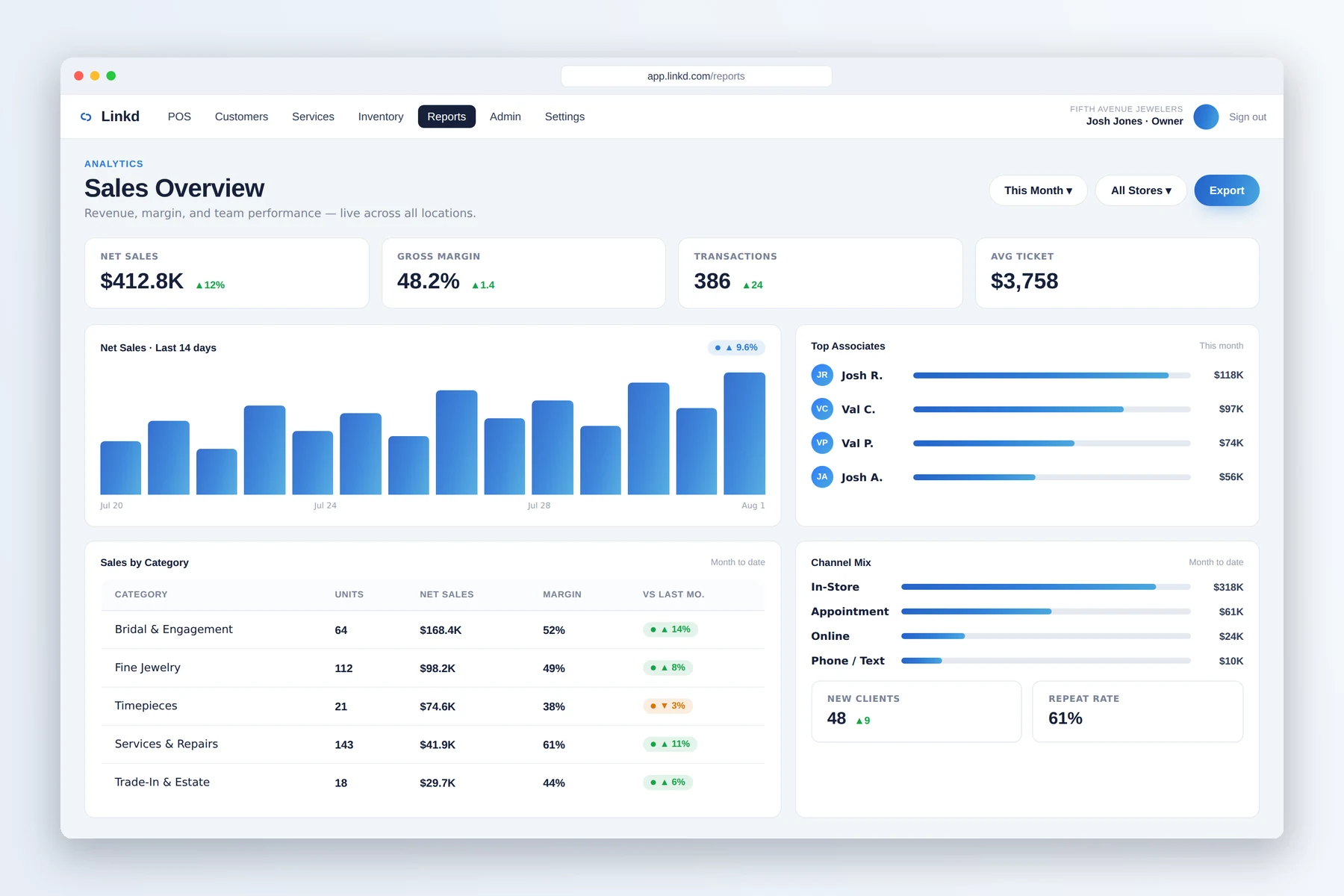
Managers can scan sales, margin, and transaction activity before the next back-office step.
For the back office
Keep balances, account aging, and finance status with the customer instead of rebuilding them later.
Keep layaway schedules, deposits, and split tenders tied to the sale and customer.
Review store activity before it moves through the accounting setup configured during implementation.
Before the books
Linkd keeps the sale, tender, deposit, and customer balance together. The export or integration path is mapped around your accounting system during implementation.
The sale, tender, deposit, and any remaining balance stay with the customer record.
Managers review sales and transaction activity before it moves to the next system.
The exact export, sync, or review process is agreed during implementation.
Quick answers
Yes. Linkd keeps customer balances, account aging, house accounts, specialty financing, and review details with the store record.
Linkd keeps POS, tender, customer, layaway, and account activity together for review. The exact export or integration is mapped during implementation.
Book a demo
Tell us about your store. We will show you the counter, the case, and the back office.