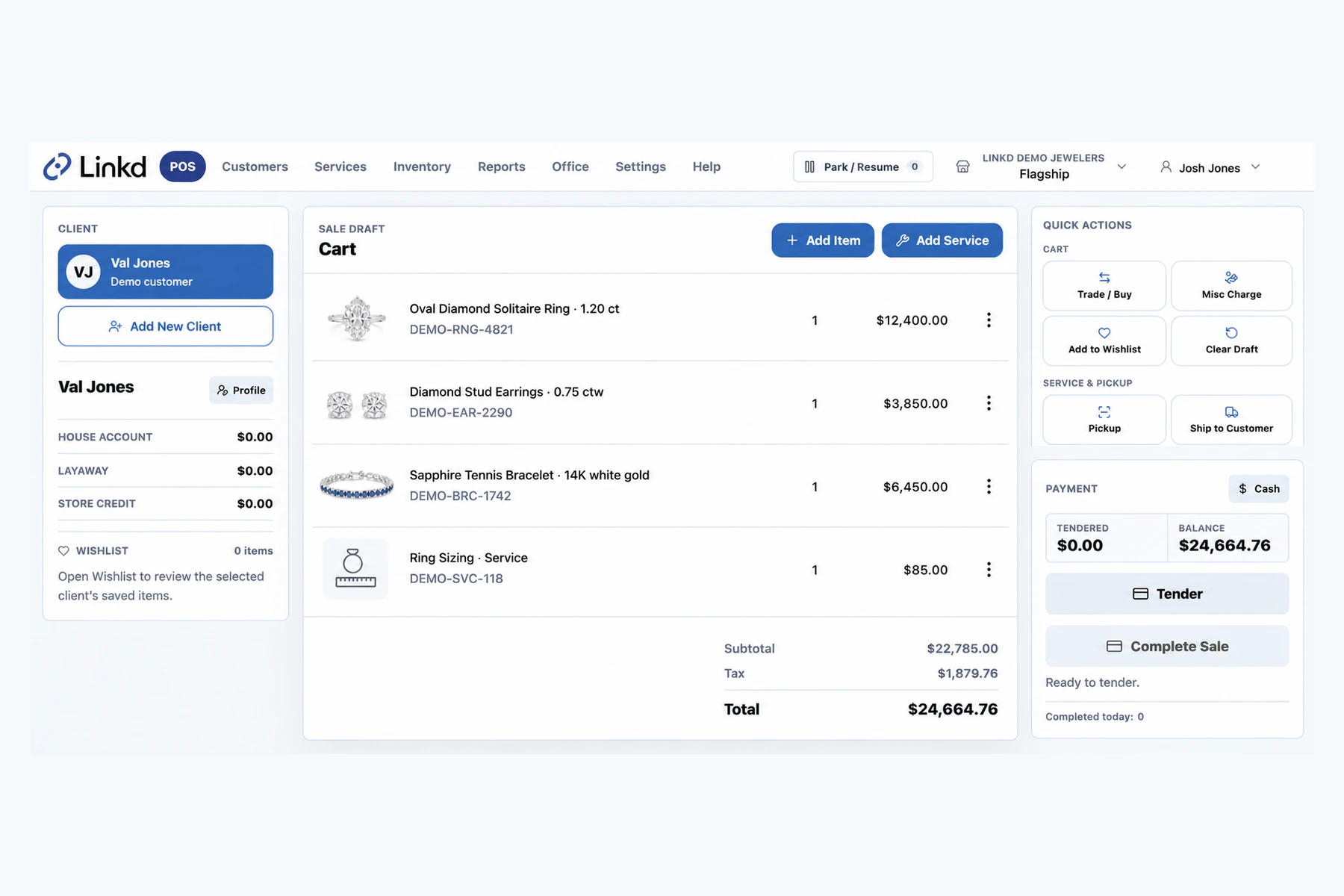
01 / Checkout
Take payment without leaving the sale
The associate sees the customer, items, services, and amount due in the same register view.

Payment processing for jewelers
Linkd keeps each payment with the sale, customer, deposit, layaway, or house account so your team can review what happened before it reaches the books.
From tender to settlement
The associate sees the customer, items, services, and amount due in the same register view.
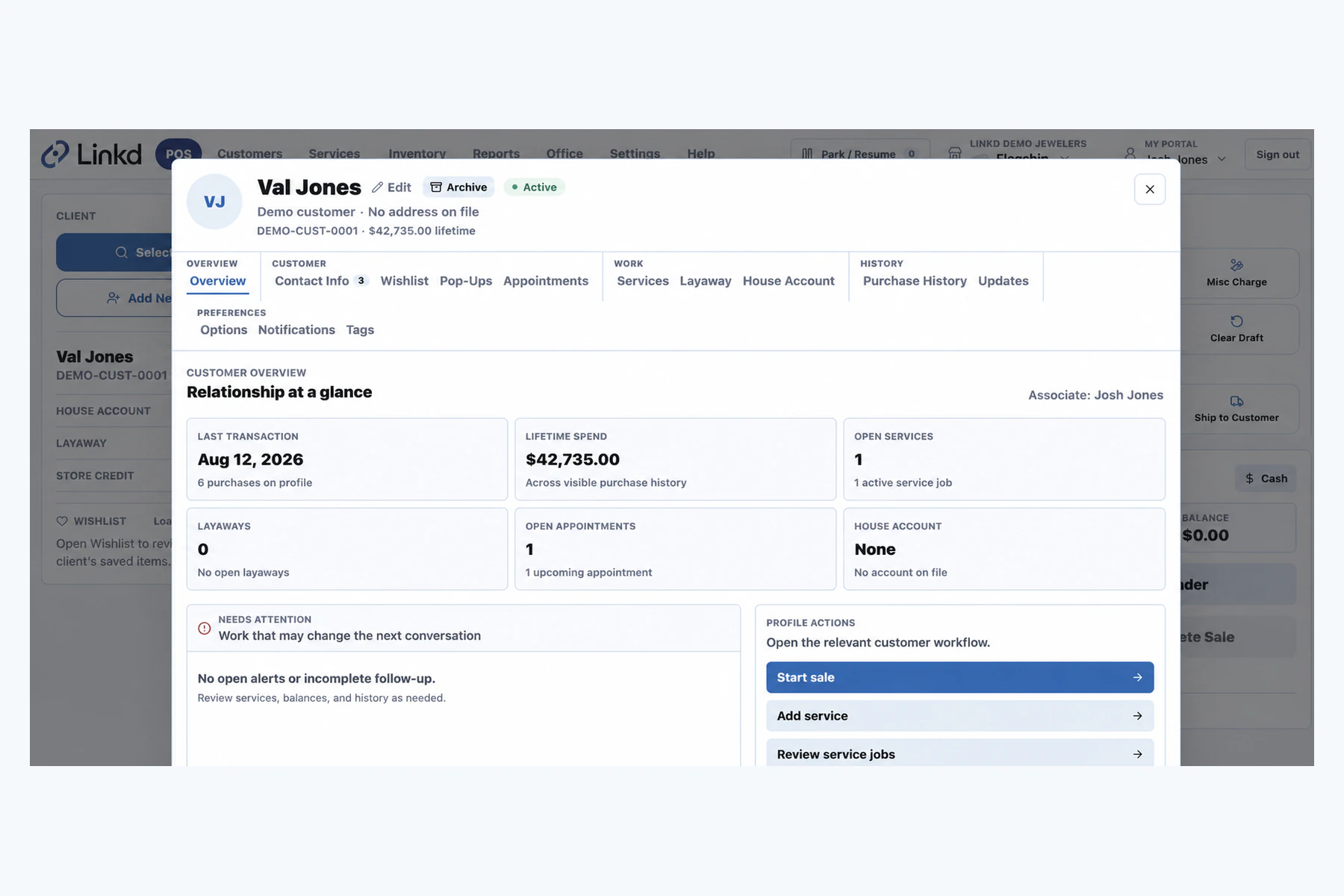
Customer details and account information remain available after the register closes.
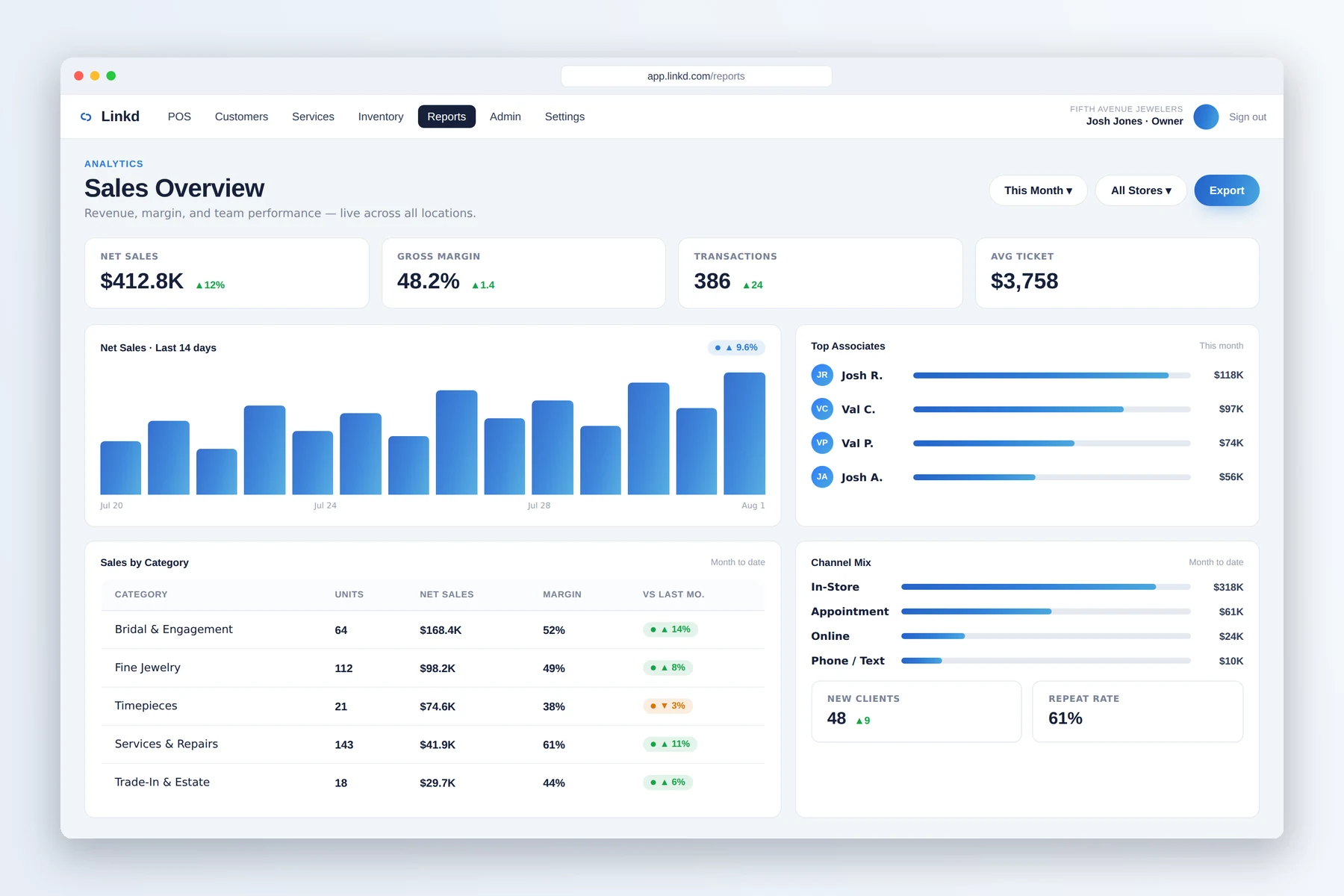
Managers can review daily activity before preparing records for accounting.
What changes for your team
Keep the payment method, customer, items, services, and amount due together at checkout.
Keep deposits, layaway, house accounts, and open balances connected to the customer and the original transaction.
See the day's tender activity in one place before settlement review and accounting preparation.
From counter to close
A payment starts at checkout, stays tied to any open balance, and remains available for end-of-day review. Accounting setup is planned around the systems your store uses.
Tender is saved with the customer, sale, service, or account it belongs to.
Deposits, layaway schedules, and house-account balances stay attached to the original transaction.
Tender activity can be reviewed before settlement and the store's configured accounting process.
Quick answers
No. Linkd keeps the payment with the sale, customer, balance, and daily review instead of treating it as a separate step.
Yes. Deposits, payment schedules, balances, and aging remain connected to the customer and original transaction.
Your team reviews payment activity in Linkd first. The exact export or integration path is mapped around your accounting system during implementation.
Book a demo
Tell us about your store. We will show you the counter, the case, and the back office.